Home filing systems fail for one reason: filing a document takes longer than putting it on a pile. Every design decision below is about reducing that time.
Fewer categories than you think
An elaborate system with twenty categories requires a decision per document, and a decision is what stops people filing.
Six to eight categories is usually enough for a household:
- Home (tenancy or mortgage, utilities, repairs)
- Money (banking, insurance, tax)
- Health
- Vehicle
- Work and education
- Identity documents
- Warranties and manuals
If a document could go in two of these, it does not matter which — you will find it either way with six categories. That is the point.
One folder per category, chronological inside
Do not subdivide. Newest at the front. Finding a document is then a matter of remembering roughly when, which people are good at, rather than remembering which subcategory, which people are not.
The incoming tray is part of the system
Filing does not happen at the moment paper arrives. Accept that, and give the paper somewhere legitimate to wait.
One tray. Everything that needs keeping goes in it. Once a month — a fixed date — the tray is emptied into folders. Fifteen minutes.
Decide once, at the tray
When you empty the tray, each item gets one of three outcomes:
- File it — it may be needed.
- Shred it — it carries a name plus an account number or address and is not needed.
- Recycle it — no personal information.
No fourth option. “Deal with later” is what creates the pile.
What must be kept separately
Identity documents, certificates, deeds and wills should not be in the general filing system. They belong somewhere fireproof and, ideally, off-site or in a safe.
Keep a note in the filing system of where they are. That note is more useful than people expect, particularly to somebody else.
Retention
Rather than deciding per document, use a box per year. Tax-relevant paperwork for the year goes in, the box is labelled, and when the retention period for that year passes the whole box is shredded.
Retention periods vary by country and circumstance — check what applies to you rather than following a general rule.
Digital does not remove the problem
Scanning creates a second system to maintain. If you scan, use the same categories and the same monthly rhythm, and be clear which is authoritative. Two half-maintained systems are worse than one maintained one.
Where a document exists only digitally, print nothing — but do make sure it is backed up somewhere other than the email account it arrived in.
Equipment
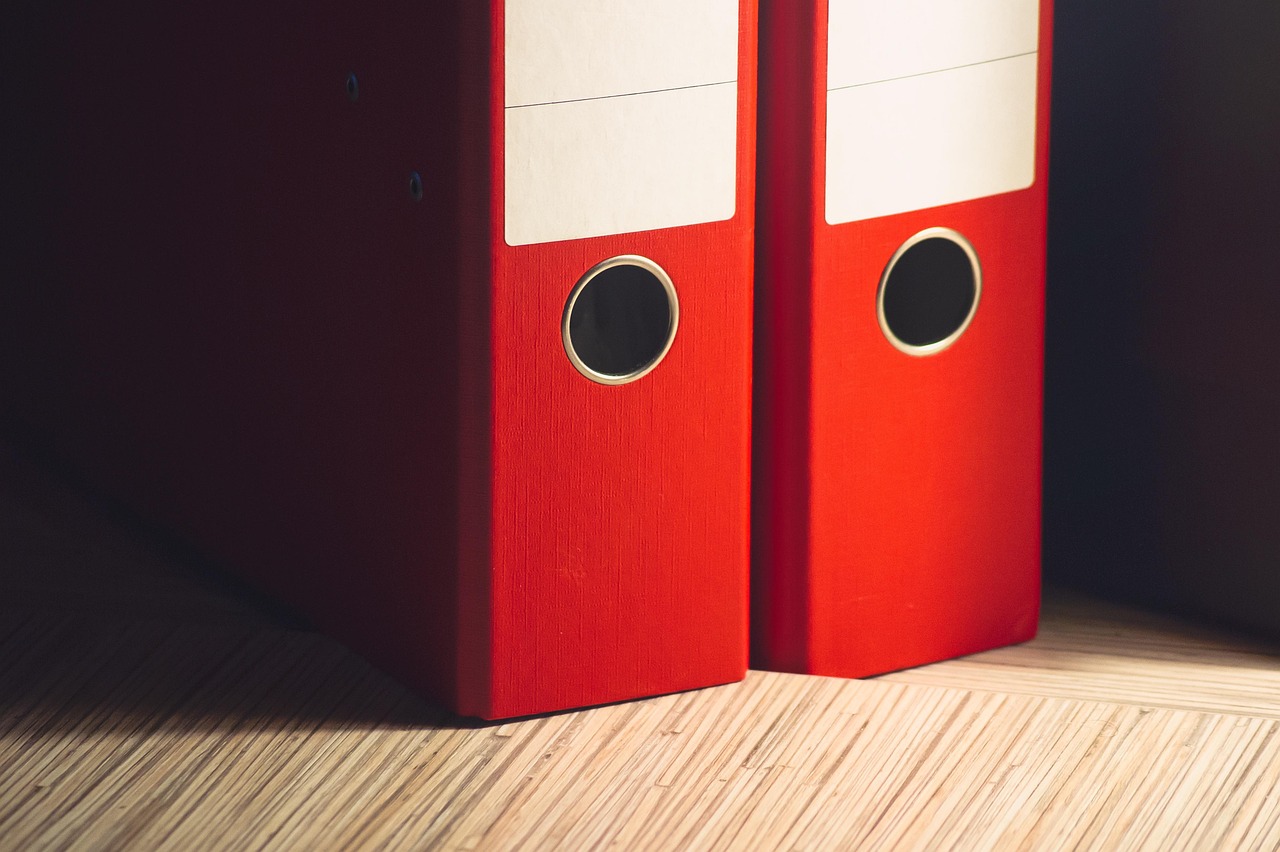
Modest. A box file or a suspension file frame, eight folders, a labeller or a marker, one tray, and access to a shredder.
Elaborate filing furniture is not the constraint. The monthly fifteen minutes is.
Starting from a pile
Do not sort the whole backlog first. Set up the folders, start filing new paper correctly from today, and work through the backlog for fifteen minutes a week. A system that works going forward is worth more than a perfectly sorted past.
We carry folders, box files and labelling at the counter on Third Avenue, and desk organisers online. Get in touch for anything not listed.